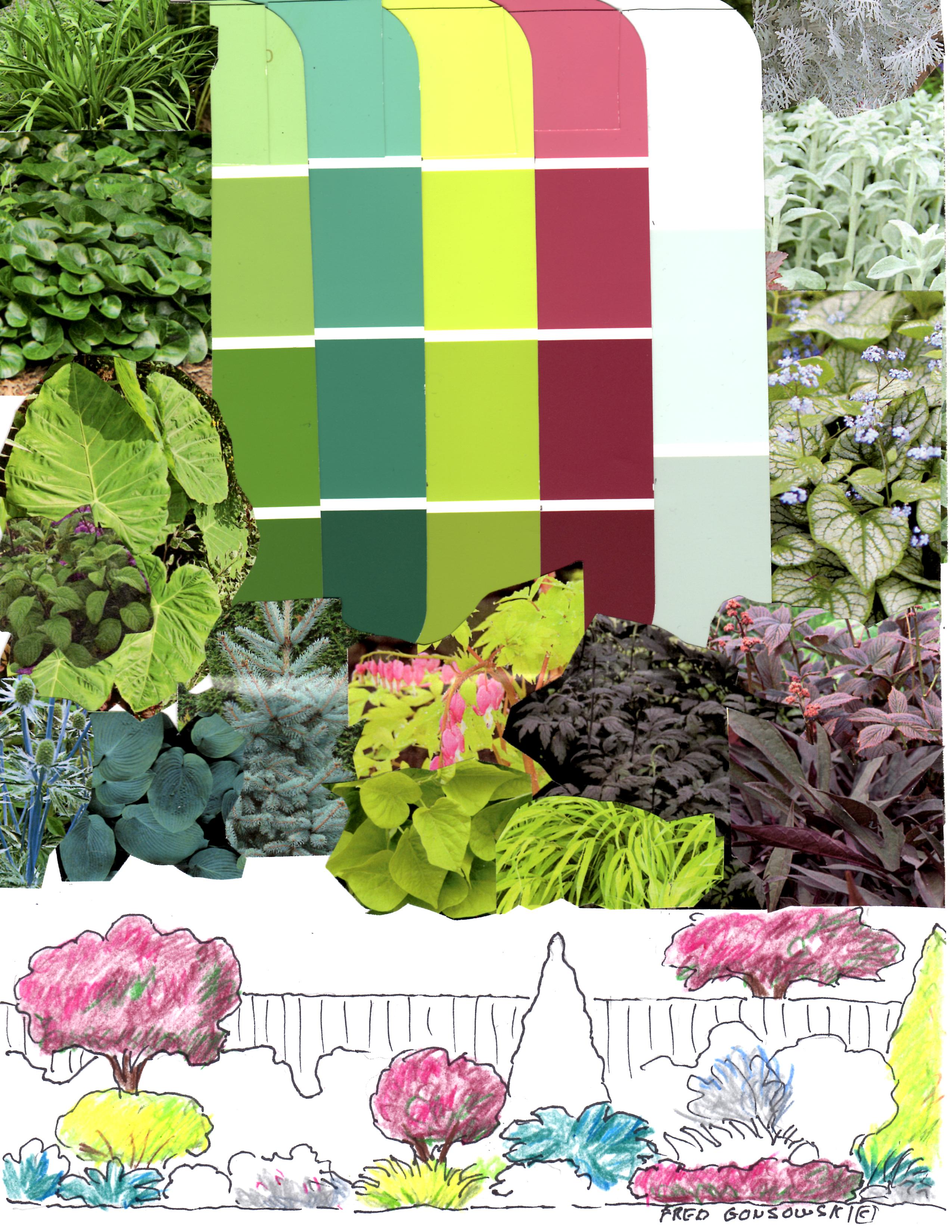
Colored Foliage adds that WOW FACTOR to a garden!

Green, Blue-Green, Chartreuse, Burgundy and Gray foliage.


My garden, here at Whimsey Hill House starts blooming in April, is a wonderful sight throughout the summer, and is done blooming, cut back, and run over with the lawn mower by the middle-end of October. I have perennials and annuals that, basically, throughout the growing season, give quite a display.

Most perennials bloom two to three weeks, and before they bloom, and after they bloom, you really only have their stems and foliage to look at. What a herbaceous perennial garden really is, is a tapestry of leaves. If you want to heighten the look of your leaf tapestry, to take it past just a sea of green foliage, with flowers, ADDING colored foliage to your garden will give it that WOW FACTOR. Continue reading
Posted in Garden Design Principles, planting a SHADE GARDEN | 5 Comments

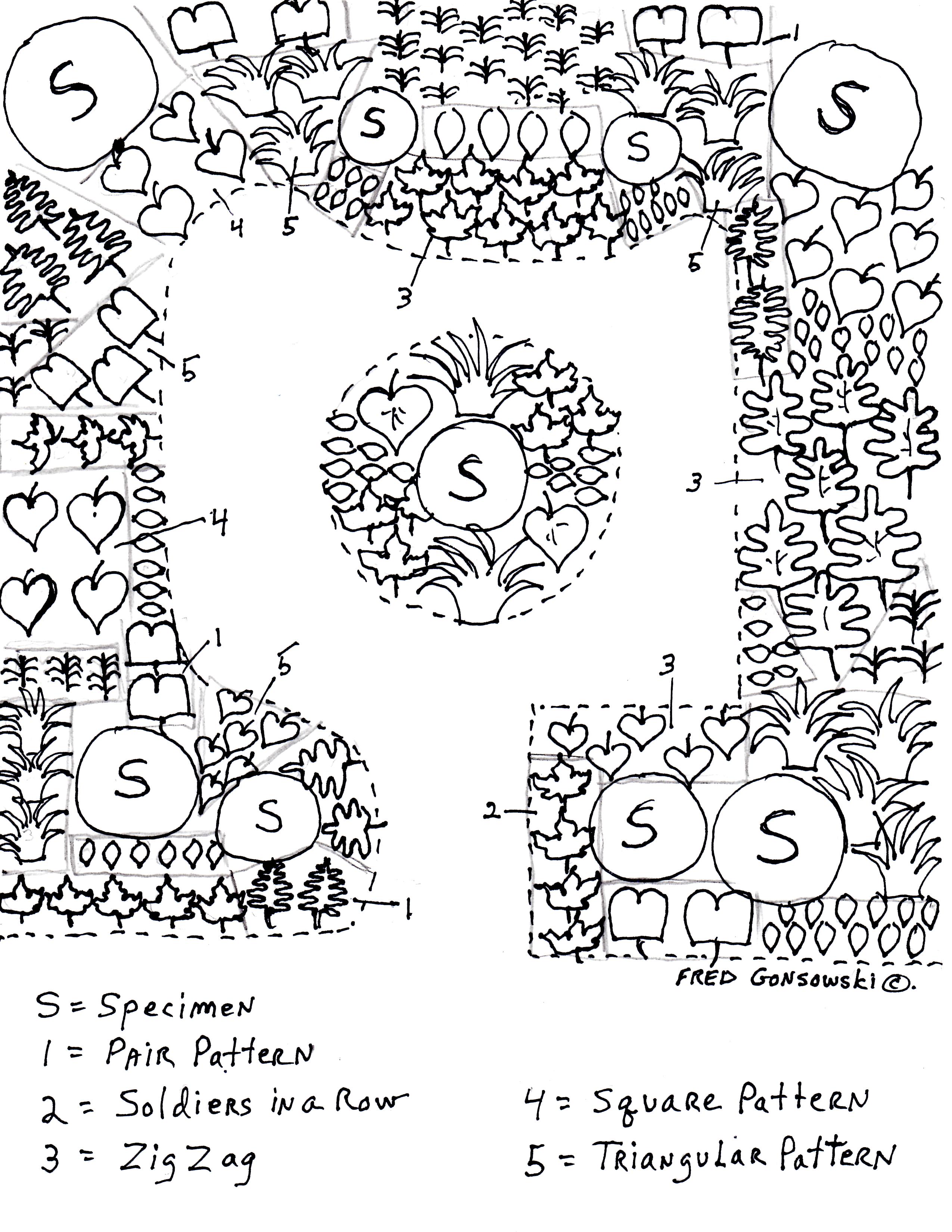
How to Plant (design) a garden. Mass versus Specimen planting.

] “When most people go and plant (design) a garden, they don't think much about mass versus specimen planting. I come from a long line of gardeners whose personal style of planting, I would call “fruit salad”. A lot of color, but no real defined flavor. To my family, gardening was getting a plant, kind of knowing how tall it would grow, and planting it in any empty spot in the garden, and then calling it a day.

I really had nothing to compare our gardening style with, until I started going on the Lenox Garden Club and Garden Conservancy Opening Day tours. The gardens on those tours, to me, were gardens professionally designed and maintained, the gardens of people who professionally planted and designed for a living, or gardens of people who read about gardening, went to lectures, took classes, and probably went on lots of tours, and knew the subject.

After going on a few of those tours, I started to think about what I was looking at. There was a similarity of how a professionally designed and planted garden was, and the design projects that I studied in art school. The rest is gardening history. So what I learned there, I am now going to teach you here! Continue reading

Posted in Garden Design Principles, planting a SHADE GARDEN | 23 Comments

When designing a perennial garden, it’s all about shapes of leaves!

Perennial garden design is all about shapes of leaves.

Perennial garden design is all about shapes of leaves.

Using different shaped leaves, to make a foliage tapestry, is an ideal, when planning the layout of your perennial garden. When you think about it, most perennials are in bloom, maybe, two or three weeks during the growing season, and that is it. What you have before, and after they bloom is their foliage. Foliage by itself is a beautiful thing, and the shapes of many plants are quite sculptural. Continue reading

Posted in Garden Design Principles, planting a SHADE GARDEN | 6 Comments

Commenting on a Blog, it’s easy!

Have you ever read a post on a blog, and wanted to make a comment, but were afraid to? Words like… Leave a Reply, Name, E-mail, Website, and Comment seemed scary! Commenting on a blog can be a fun thing to do, and it inspires, the person who wrote the post. There is nothing like going to your blog control panel / dash-board, and seeing someone put the time and effort into making a comment on something you have written.

If you see a topic on a blog that intrigues you, write down some trial comment-lines, on a piece of paper, and see what you come up with. Sometimes a comment congeals quickly, and sometimes you have to approach it a few different ways, before it starts to look like something, and sound good. Writing a Post is just like writing a comment, just longer. Sometimes it goes quickly, and sometimes I have to labor over it. To read more click Continue reading

Posted in How-to | 3 Comments

Dividing Miscanthus Grass, not easy, but you can do it!

A cutaway showing the root system of ornamental grass.

A cutaway showing the root system of ornamental grass.

Miscanthus grass is a nice looking ornamental grass, grows 6 to 8 feet tall, provides movement in the garden, great planted as a specimen, or in small groups, sends up feathery plumes in the fall, and is great for winter interest, BUT is hard to divide! To read more about how to divide it click Continue reading

Posted in LAWN Care, San Francisco Chronicle / eHow references or resources, The Spring Garden | 17 Comments

Japanese Knotweed, controlling and killing it

Japanese Knotweed

Years ago my father planted a row of Japanese Knotweed along the fence. It liked the clay soil, he put it in, and QUICKLY took off. For years my father called it Elephant Ear Plant, or Bamboo. Only about ten years ago, I found out its real name, when I saw someone had it on a Garden Conservancy tour.

The Japanese Knotweed is a quick-growing plant! It yearly comes up from the ground, and produces a thick-dense 10-12 foot tall screen. In mid-September, it produces a lovely display of white flowers, that attracts bees, and finally in October, when hit by a hard-killing frost, dies back to the ground. At that time, you take a really good pair of branch clippers, and cut it back to the ground, as CLOSE as possible. The Japanese Knotweed does not continue growing on the previous years growth, it ALWAYS dies back to the ground. Continue reading

Posted in Bushes, Shrubs, Trees, LAWN Care | 16 Comments

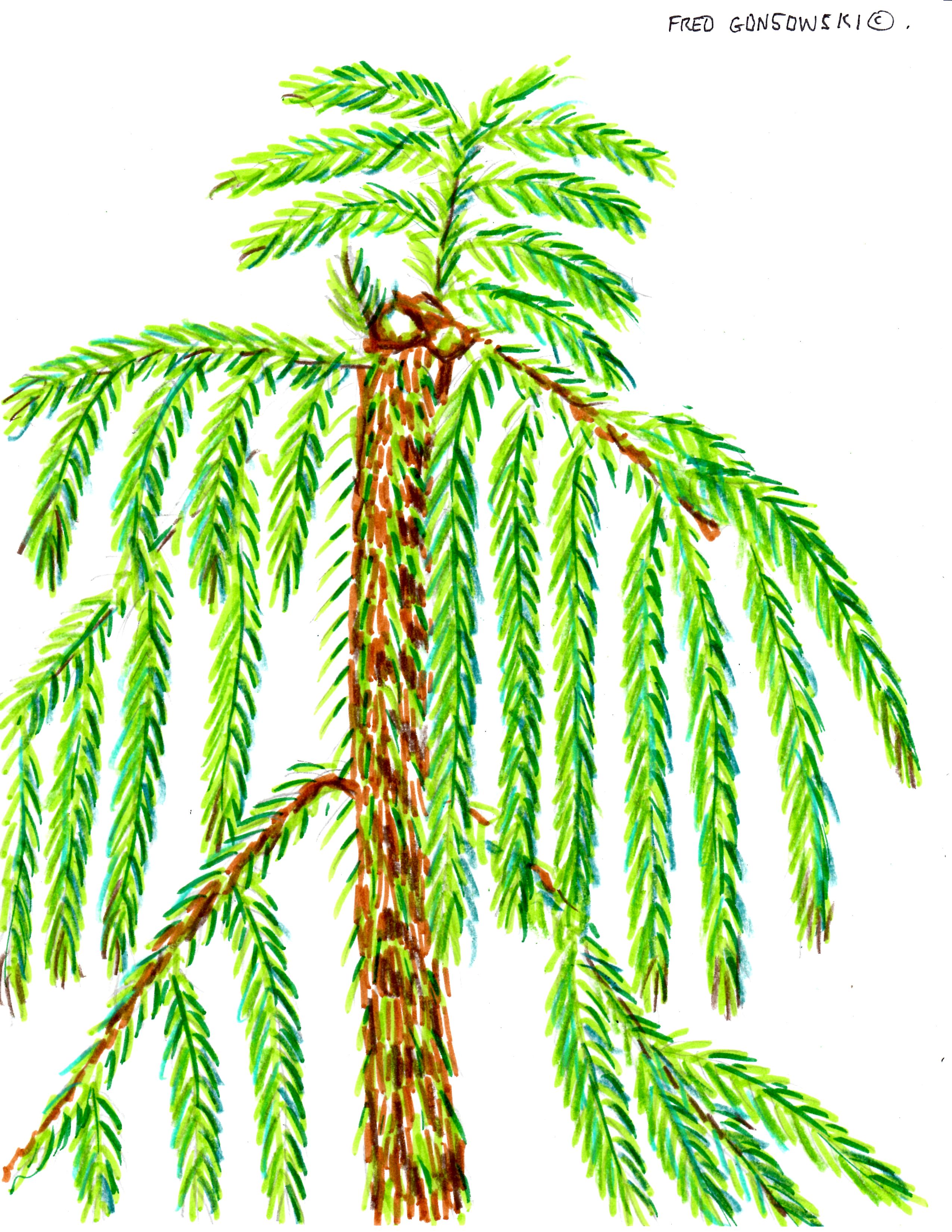
Norfolk Island Pine, an Easy plant to Control its Height

Pruning a Norfolk Island Pine

Even thought I have the OH TO BIG garden, I really am not that much into house plants. Years ago, in a different house, I had wide window sills and radiators to grow house plants on. But, it is now a different time, and I only have one house plant, a Norfolk Island Pine. The Norfolk pine was originally given to my sister as a gift. She kept it for a while, and then felt I could manage it better. When I got it, the Norfolk Island Pine was a small plant, about two foot tall. I re-potted it, and over the years it grew into quite a nice 6 foot tall specimen. Or, should I say, the pot and plant reached the 6 foot mark.

One day, I looked at it and thought it had gotten a bit to tall and wide. Since I was now the owner of that plant, and really did not have much emotional attachment to it, I thought I was going to give it a HAIR CUT, and see what happens. I thought, if it lives it lives. If it dies it dies. So this is what I did to it…. Continue reading

Posted in House plants / Forcing bulbs | Tagged , | 30 Comments

Zoysia Grass, and How I got rid of it

Zoysia grass is probably wonderful, if you live in an area where it is warm year round. By warm, I mean days and nights never below 50 degrees fahrenheit. If the temperature falls, like it does in the great north-east of America, where I live, that thick, rich green, strong grass, starts to turn coco mat-straw beige. If you live in New York State, and have it, expect your infected lawn to be that NOT to LOVELY beige from mid October until almost mid June, when days, and nights again pass the MAGIC 50 degree mark. While it is beige, people will also think you burnt your lawn using too much fertilizer.

Zoysia grass is different from the grasses that make up Eastern lawns, like fescue, blue grass, and perennial rye grass. They all have a root system that grows down into the soil looking for water. Zoysia grass, on the other hand, grows horizontally crawling and creeping more along the top of the soil surface, and choking out any other grass in its path. The root of the zoysia grass is called a stolon, and to me it resembles coarse textured spanish moss.

Somehow, years ago, I got a zoysia grass INVASION in my lawn. Continue reading

Posted in LAWN Care | Tagged | 78 Comments

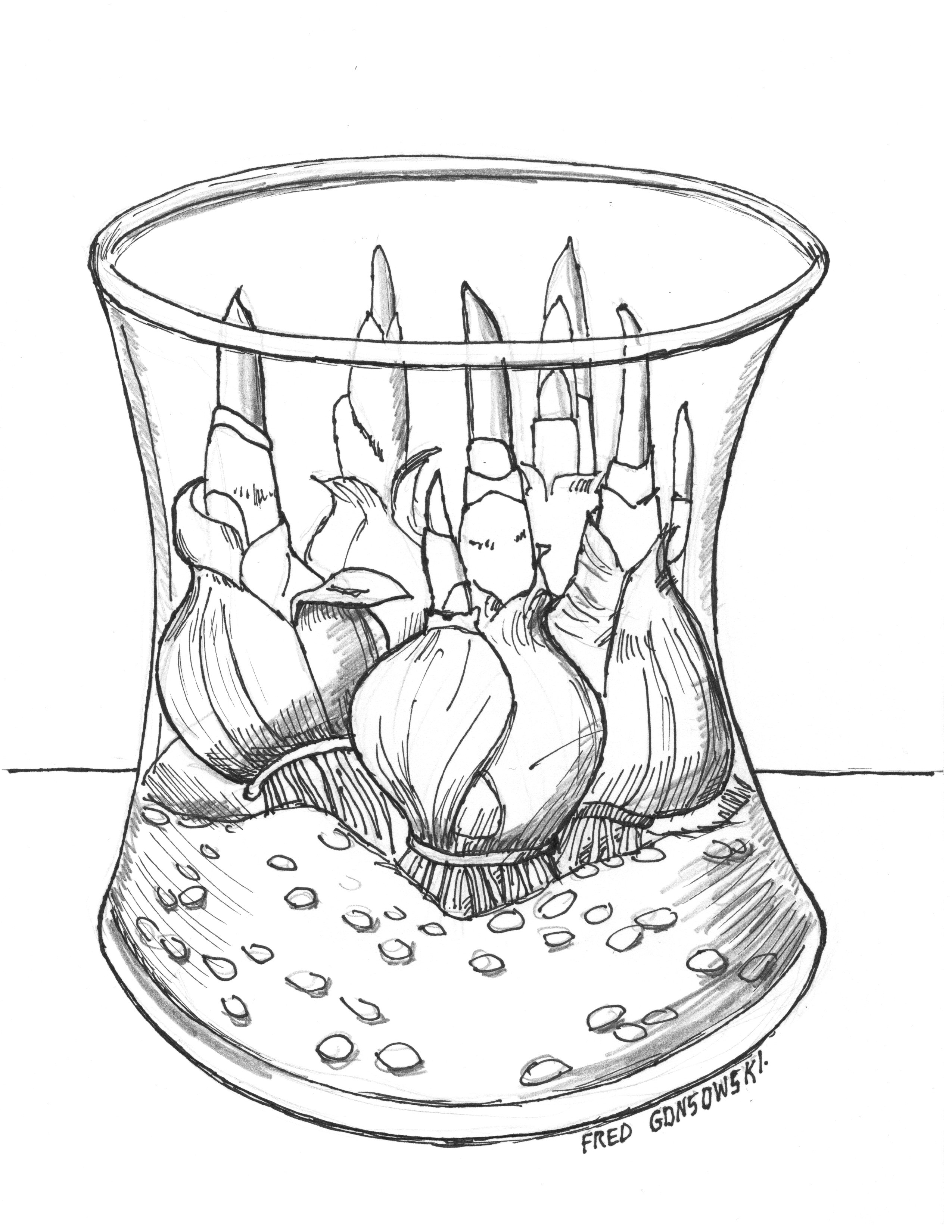
Forcing Paperwhite Narcissus, A little bit of spring in the dead of winter

It's Easy to Force Paperwhite Narcissus

It's Easy to Force Paperwhite Narcissus

The winter forcing of paperwhite narcissus, has been a tradition of many gardeners, for years. I started when a friend gave me a bulb forcing kit as a Christmas gift. The kit consisted of a plastic three-sided cup, of sorts, a holder that fit into the three-sided cup, and three “pre-chilled” paperwhite bulbs. All I had to do was add water, and watch them grow. After they bloomed, I pulled out the spent bulbs, tossed them, and saved the bulb holder. For the next few years, until the device broke, I re-packed it with paperwhite bulbs that I bought at a local garden center.

After that, I started experimenting with my own bulb forcing set ups. So this is how I do it now…. Continue reading

Posted in House plants / Forcing bulbs, The Winter Garden | 2 Comments

Preparing your garden for winter, putting it to Bed

If you haven’t already started, it is time to get your garden ready for a long Winters nap. First take a pair of hand pruners, and start chopping back your perennials, as close to the ground as possible. Leaving stems two or three inches high, is just about right. If you want the work to go a little faster, try using a sharp pair of hedge clippers to lop down your plants. Next pull out all of your annuals. When it comes to plants like hostas and day lilies, after they are hit by a killing frost, you can pull at them, and they rip off pretty easily.

If you have rose bushes, mound fallen leaves, day lily grasses, and frost bit hosta leaves around the base of the plants. Make a ring, or collar around the rose-bush about eight to twelve inches high, and about twelve inches, or more wide. The ring of vegetation will insulate the rose from cold Winter weather, and stop Winter thawing and freezing. Continue reading

Posted in The Autumn(Fall) Garden | Tagged | 2 Comments